
Beyond Grit: Performance Playbook for Resilient Sobriety
Janelle Lawrence
Persistence grabs headlines, but true high performers know success especially in sobriety is less about heroic grit, more about strategic, adaptive growth. Sobriety isn't a single PR. It's a daily iteration, where honest selfassessment, contingency plans, and skill stacking drive sustainable gains.
Rethink Your Recovery Metrics
Persistence grabs headlines, but true high performers know success - especially in sobriety - is less about heroic grit, more about strategic, adaptive growth. Sobriety isn't a single PR. It's a daily iteration, where honest self-assessment, contingency plans, and skill stacking drive sustainable gains.
The Real Power of Persistence - Optimized
Winning at recovery requires repeat effort, tight feedback loops, and rapid adjustment. Tracking relapse as data, not defeat, unlocks peak adaptation. Top programs emphasize the "3 P's": Patience, Persistence, Perseverance. Each setback? It's a rep - a chance to revise your playbook and level up self-awareness.
Grit's Limits - And Where a Safety Net Saves Your Stats
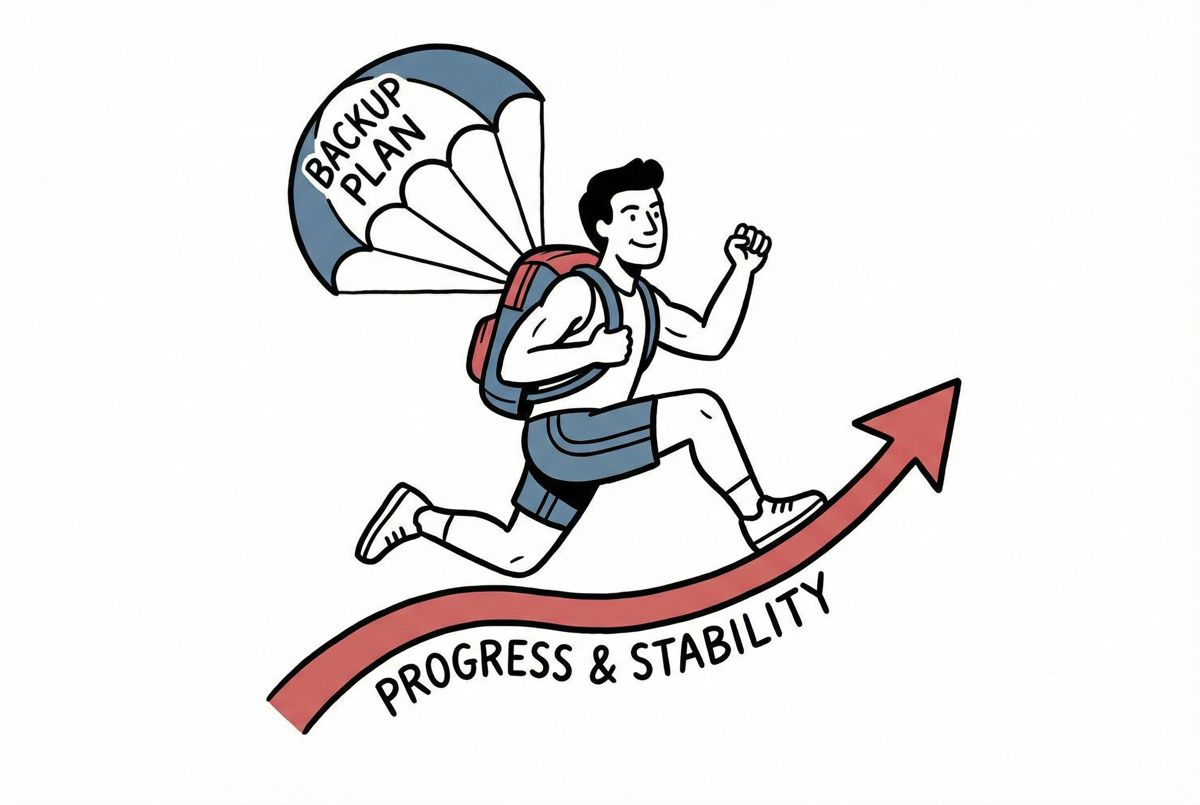
Grit pushes limits, but it's not an unbreakable shield. Your environment - stable housing, a strong social net, reliable income - sets your baseline. In recovery, high-risk, all-in moves are hazardous. The data's clear: measured progress and backup plans preserve your streak and prevent catastrophic resets.
Survivor Bias: Don't Benchmark Against Outliers
Performance myths focus on the winners, ignoring quiet grinders with fewer resources. Sobriety outcomes depend heavily on the strength of safety nets: financial, relational, professional. One misstep can flip your stats. So: Build in margin. Assume shocks. Design backup routines.
Science-Driven Recovery: Build a Backup-Loaded Plan
The best recovery protocols build for setbacks. Relapse prevention plans (think "if X, then Y" rules) are rooted in behavioral science. Multilayered support - stable routines, social circles on call, 24/7 therapy access - are built-in shock absorbers. Rugged flexibility beats brittle resolve, every time.
Skill Stacking: Your Ultimate Stabilizer
Transferable skills are your real-world insurance:
- Emotional: Problem-solving, cognitive agility, stress buffering (CBT & mindfulness boost these stats)
- Social: Networking, boundary setting, support reciprocity
- Economic: Workforce flexibility, retraining, side hustles
Invest here, and no single event tanks your recovery metrics. These skills buffer all major performance domains - career, relationships, sobriety.
Practical Play: Experiment with Calculated Risks
Performance strategy: Don't put all your chips on one shot. Spread reps across safe experiments - new work routines, hobbies, or support teams. Each test builds stats (and muscle) without risking your entire recovery foundation. Track what you try; double down on what delivers stability and growth.
Real Recovery PRs: Winning Stories
- The pro who takes a lower-tier job prioritizes structure and routine - sacrificing immediate status for long-term stat gains.
- The comeback: After relapse, build a safety net so robust it becomes your new baseline.
- The pivot: Trading a high-stakes gig for one with less prestige but far more balance - a win for the resilience stat sheet.
Every win here is hybrid: persistence plus adaptability, backup plus self-compassion.
Performance Protocol for Resilient Sobriety
- Persist - deploy contingency plans at every plateau.
- Test and iterate: size risk to your current support stats.
- Continuously skill-up - emotionally, socially, economically.
- Prioritize routine and flexibility over rigid perfection.
Mastery in sobriety? It's not about singular willpower. It's about strategic, repeatable progress - always adapting your playbook. Move forward with backup. Track setbacks as growth data. Prioritize recovery stats you can measure - mood consistency, social engagement, daily routine adherence, and relapses per quarter.
Quick Action Plan & Tracking Tip
- Pick one measurable stat - e.g., number of days in routine, mood rating, or support check-ins per week.
- Set a baseline - log your numbers.
- Add one safety net - backup plan for your toughest moment this week.
- Review weekly, adjust as you go.
Measure. Adapt. Repeat. That's the performance optimizer's path - on the mat, and in recovery.
About the Author
Janelle Lawrence
Janelle Lawrence is a wellness journalist with over 15 years of experience covering recovery, mental health, and lifestyle transformation. After witnessing the profound impact of sobriety in her own community, she dedicated her career to sharing stories that inspire and inform. When not writing, she enjoys hiking, meditation, and mentoring aspiring health writers.